Custom Corduroy Hats: Key Considerations For Global Brand Sourcing
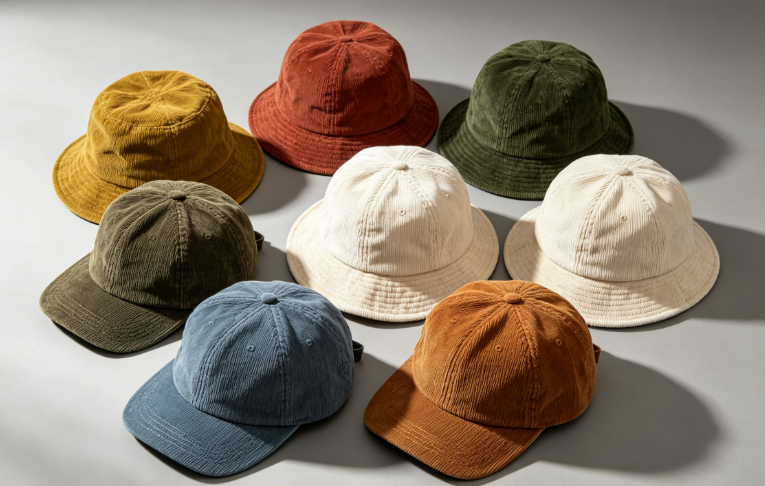
Corduroy headwear has maintained steady popularity across Japan, Australia‑New Zealand, North America and Europe. Its retro texture, soft hand‑feel and vintage aesthetic make corduroy caps and bucket hats a favourite for lifestyle brands, surf‑wear labels and gift‑product lines.
Nevertheless, corduroy is a tricky fabric for OEM production. Many buyers encounter unexpected issues including uneven texture, embroidery distortion, colour fading and unstable shrinkage after receiving bulk goods.
Based on our decades‑long experience producing corduroy hats for global clients, this article covers fabric selection, craft limitations, decoration options, testing standards and practical sourcing advice for your next project.
Corduroy Fabric Basics: Wale Count & Pre‑Shrinking Treatment
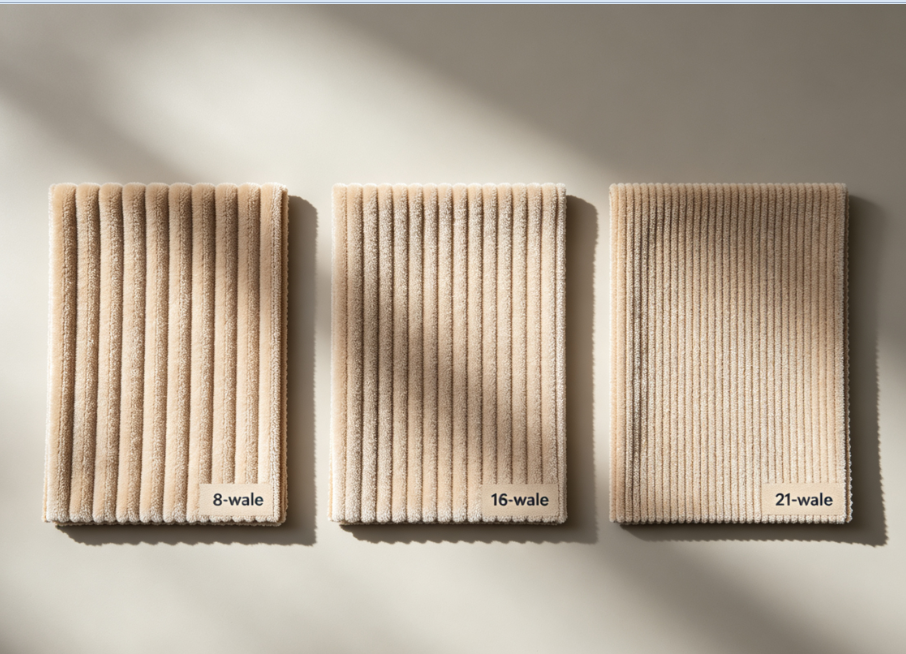
When sourcing corduroy hats, the first critical parameter is wale count, which refers to the number of vertical ridges per inch. Common options range from 8‑wale up to 21‑wale.
- Thick 8‑11 wale: bold retro texture, popular for autumn‑winter collections
- Medium 14‑16 wale: balanced texture, most widely used for caps and bucket hats
- Fine 19‑21 wale: smooth subtle surface, preferred by Japanese minimalist brands
One of the biggest hidden risks is insufficient pre‑washing & pre‑shrinking. Without proper pre‑shrinking processing, finished hats will deform, shrink or twist after customer washing.
Different markets have different expectations: Japanese customers pay strict attention to washing‑size stability; US and EU markets require textile chemical compliance; Australian‑NZ brands focus on colour fastness under strong sunlight.
Sourcing tip: Confirm wale count and pre‑shrinking requirement in writing, and lock physical fabric swatches before sampling.
Decoration Choices On Corduroy: Embroidery, Printing & Woven Patches
Corduroy’s raised ribbed surface creates special challenges for logo decoration. Not all craft effects that work on twill cotton will translate well onto corduroy fabric.
Embroidery
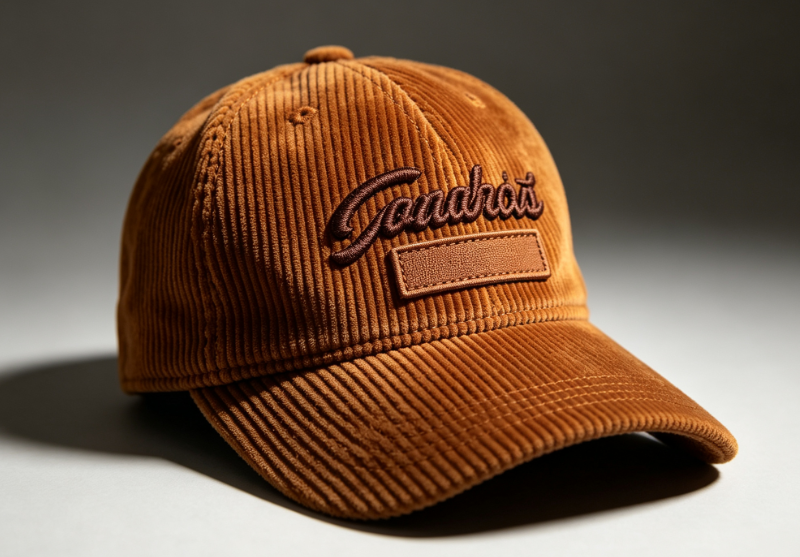
Embroidery is the most popular choice, yet pitfalls exist. Thick corduroy ridges can push threads upward, making logos look uneven. Too‑dense embroidery may crush the velvet pile and create flat, dull spots on your hat.
Solutions: Adjust stitch density for corduroy material; avoid overly solid heavy‑fill embroidery designs.
Printing
Screen printing and rubber printing are feasible, but abrasion resistance becomes weaker on fuzzy surfaces. Repeated rubbing during daily wear may cause peeling.
Woven patches / Leather patches
Woven label patches and faux‑leather patches perform excellently on corduroy. They avoid embroidery‑crushing‑pile risks and deliver high‑grade vintage visuals, widely adopted by Japanese and AU‑NZ lifestyle brands.
Common Production Defects You Need To Watch Out For
Even with good‑quality raw fabric, corduroy hats are prone to several typical manufacturing defects you should add to your inspection checklist:
1.Ridge direction deviation:All fabric panels must keep wale ridges running in consistent directions. Misaligned wales on different hat panels will ruin the visual appearance.
2.Uneven pile crushing:During sewing and pressing, improper machine pressure can flatten local corduroy pile.
3.Colour shade difference:Corduroy is sensitive to dye‑batch variation. Strict colour comparison against sealed swatches is required for bulk production.
4.Shrinkage inconsistency:Pre‑shrunk fabric is non‑negotiable for repeat‑order stable quality.
MOQ, Sampling & Lead‑Time Reality For Corduroy Custom Projects
Many brands want corduroy headwear for small‑batch test launches. Real‑world MOQ depends mainly on whether you select existing stock fabric or custom‑dyed fabric.
·Using in‑stock corduroy fabric: supports small‑batch OEM, suitable for startup brands testing Japan, AU‑NZ, US & EU markets
‑ Custom dyed corduroy: higher minimum order for fabric dyeing, fit for mature brands with stable sales volume
Sampling cycle for corduroy hats usually runs 10‑18 working days, longer than ordinary twill baseball caps, because fabric preparation and embroidery parameter debugging take extra time.
Bulk‑production lead‑time will also extend if you request custom‑dyed colours. Always confirm fabric status and timeline in writing before placing orders.
Quick Pre‑order Checklist For Corduroy Hat Buyers
✅ Confirm corduroy wale count is documented
✅ Fabric pre‑shrinking treatment confirmed
✅ Sealed physical fabric swatch kept for bulk comparison
✅ Logo craft adjusted and tested specially for corduroy surface
✅ Check wale‑ridge direction consistency across all hat panels
✅ Clarify target‑market compliance requirements (Japan / EU / US / AU‑NZ safety & chemical standards)
Closing
Corduroy headwear delivers outstanding vintage‑style appeal, yet it demands higher attention to fabric, craft and inspection compared to standard cotton hats.
We provide OEM & ODM custom corduroy caps, bucket hats for brands, importers and wholesalers worldwide. We keep multiple‑wale corduroy fabric options in stock, complete sampling debugging for embroidery & patch techniques, and follow region‑specific quality standards for Japan, AU‑NZ, US and EU markets.
If you are planning corduroy hat projects and need sampling support or quotation, feel free to send over your design references and specifications.
Contact us to talk about your custom corduroy headwear solution.